
Willie Mullins and the King George Quest
 Available in US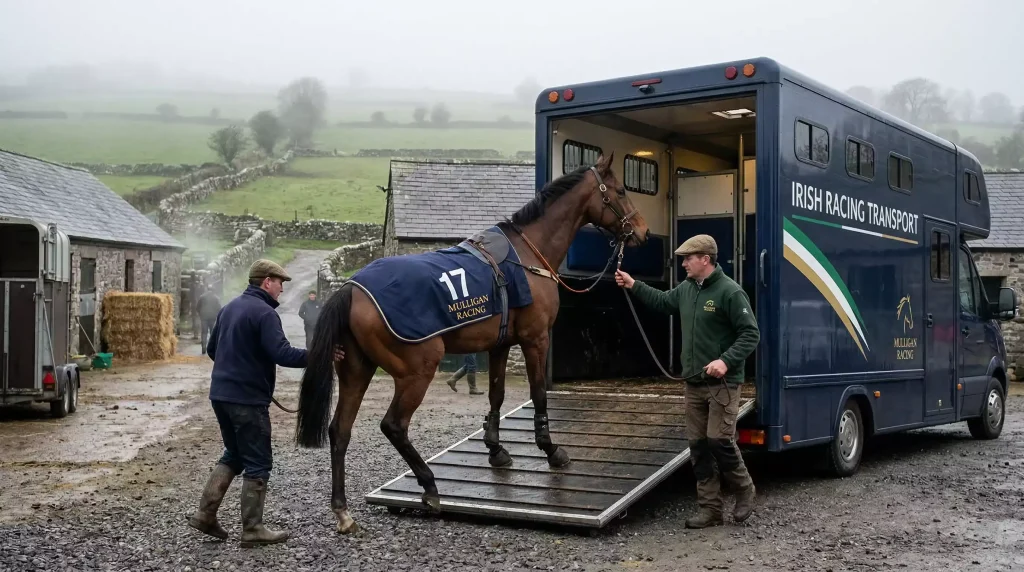
The Irish Threat
Willie Mullins dominates Irish National Hunt racing with an authority that makes competition seem futile. Multiple Irish Champion Trainer titles, Cheltenham Festival supremacy, a Closutton operation that produces winners by the hundred—Mullins stands alone atop Irish jumping. The King George, however, has provided only two victories: Florida Pearl in 2001 and Tornado Flyer’s 28-1 shock in 2021.
The Closutton cavalry descends on British racing at strategic moments. Cheltenham in March sees Mullins runners across every division; Aintree follows with further raids. But Boxing Day has historically been treated differently—Tornado Flyer’s 2021 success marked Ireland’s first King George victory since 2005. The race presents challenges that other Grade 1s don’t.
This relative scarcity makes each Mullins King George tilt intriguing. A trainer who wins virtually everything in Ireland, who raids Britain successfully at Festivals, who holds the record as the most successful Cheltenham Festival trainer of all time—yet Kempton on Boxing Day remains a race he targets sparingly. The Irish threat looms annually; commitment varies.
Willie Mullins and the King George Quest — More on this topic at king george betting.
King George Attempts
Mullins has won the King George twice across more than two decades—a solid record but modest relative to his dominance elsewhere. Florida Pearl’s 2001 victory came against triple Gold Cup winner Best Mate, a statement win that established Mullins as a force at the highest level of British racing.
Twenty years passed before Tornado Flyer delivered a second King George at 28-1—the longest-priced winner in the race’s history. The 2021 success came with stablemate Asterion Forlonge falling at the last when positioned to challenge, adding fortune to the outcome. Yet Tornado Flyer’s performance warranted the victory; he travelled sweetly throughout under Danny Mullins.
Between these victories, Mullins sent runners sporadically rather than targeting the race systematically. The Savills Chase at Leopardstown—run two days after the King George—offered an alternative Grade 1 without travel complications. Many Closutton horses went there instead, ceding Kempton to British rivals.
The pattern reflects strategic calculation rather than fear of competition. Leopardstown on December 28 provides Grade 1 action on home turf; prize money and prestige rival the King George’s; travel stress disappears. For horses who don’t explicitly need the King George for career enhancement, staying home makes sense.
Yet Mullins continues entering horses when conditions seem favourable. Ground expectations, horse profiles, and competitive assessment all factor into annual decisions. The King George remains a target rather than a concession—Mullins wants to add to his two victories, even if alternative options reduce the urgency.
Logistical Challenges
Crossing the Irish Sea for Boxing Day racing involves complications that domestic trainers avoid. Ferries, flights, quarantine considerations, timing around Christmas schedules—each element adds friction to King George campaigns.
Travel stress affects horses differently. Some travel well, arriving relaxed and ready; others find the journey unsettling, underperforming despite physical fitness. Identifying which Closutton horses handle travel—and which don’t—requires experience that accumulates across multiple raids. Mullins knows his horses; predicting newcomers’ travel tolerance remains educated guesswork.
Christmas scheduling complicates logistics further. Ferry availability on December 25 is limited; flying horses requires specialised transport that doesn’t operate on bank holidays. Getting horses from County Carlow to Surrey between Christmas Eve and Boxing Day morning demands planning that domestic trainers take for granted.
Ground conditions introduce additional variables. Mullins must commit to travel before knowing Boxing Day going precisely. A horse suited to soft ground might travel only to find Kempton riding good; the journey becomes wasted effort when conditions don’t suit. British trainers can withdraw on race morning without sunk travel costs.
Staff logistics matter too. Travelling head lads, grooms, and support personnel sacrifice their Christmases for Kempton trips. The dedication required creates its own pressure—Mullins sends runners when genuine chances exist, not for speculative adventures that waste staff goodwill.
These challenges don’t excuse King George absence; they explain why Closutton treats Kempton differently from Cheltenham. March allows planned travel with flexibility; December demands commitment before conditions crystallise.
Recent Contenders
Since Tornado Flyer’s 2021 triumph, Mullins has approached the King George with varying intensity. Some years brought genuine contenders entered with winning intentions; others saw token entries withdrawn when Leopardstown seemed preferable—in 2026, Mullins withdrew all eight of his remaining entries including Galopin Des Champs and Gaelic Warrior.
Galopin Des Champs emerged as Mullins’ best staying chaser of the current generation. Multiple Cheltenham Gold Cup victories established him among the greats; the King George presented an obvious target. Yet Mullins chose alternatives, prioritising spring targets over Christmas exertion. The horse’s absence from Kempton reflected strategy rather than respect for opposition.
Kemboy represented King George hope before Tornado Flyer’s success—a proven Grade 1 winner whose profile appeared to suit Kempton’s test. His King George efforts produced creditable performances without victory, the pattern that previously defined Mullins’ Kempton record before 2021’s breakthrough.
Analysis of recent campaigns reveals no consistent barrier to success. Different horses struggled for different reasons: ground, pace, travel effect, or simply meeting superior opposition. What’s changed is the psychological barrier—Mullins proved he can win the race, making future victories feel more attainable.
What’s clear is continued interest tempered by strategic flexibility. Mullins enters horses most years but withdraws freely when conditions don’t suit. A third King George could come any Boxing Day the right horse meets the right conditions.
2026 Prospects
Mullins’ 2026 King George plans depend on which staying chasers emerge from his deep squad as Kempton-suitable candidates. The Closutton depth ensures options exist; identifying which horses merit the Boxing Day trip requires autumn assessment.
Young chasers progressing through grades might peak at precisely the right moment. Mullins develops horses patiently, allowing physical maturity before demanding championship performances. A novice who impressed through 2026 could emerge as a 2026 King George contender if the trajectory continues upward.
Established stars face the annual decision: King George or Leopardstown? The choice depends on ground expectations, recovery schedules, and spring targeting. Horses aimed specifically at the Cheltenham Gold Cup might benefit from the Savills Chase’s later timing; those seeking mid-season Grade 1 success might travel to Kempton.
Mullins’ public statements provide limited guidance. Irish trainers traditionally downplay British raid intentions, avoiding market attention before committing. Confirmation of King George runners often comes closer to declaration stage than autumn prognostication. Watch for entries and withdrawals rather than relying on press speculation.
The prospect of Mullins adding a third King George to his CV generates annual anticipation. His two victories prove the race is winnable from Closutton; timing and horse selection remain the variables. Whether 2026 delivers depends on horse quality meeting race conditions—variables that won’t resolve until Boxing Day itself.
Irish vs British Chasers
Stylistic differences exist between Irish and British staying chasers—though stereotypes oversimplify reality. Irish horses reputedly emphasise stamina; British horses reputedly favour speed. Kempton’s flat track theoretically suits the British profile; undulating Irish courses prepare horses differently.
The statistics complicate easy narratives. According to OLBG analysis, 10 of the last 23 King George winners had previously run in the Betfair Chase at Haydock—overwhelmingly British-trained horses. This correlation might reflect British trainers targeting Kempton more systematically rather than inherent suitability differences.
Irish raiders have won the King George historically; the race isn’t closed to visitors. But the balance favours domestic runners across recent decades. Whether this reflects real suitability differences or simply training patterns remains debatable.
Mullins’ horses compete successfully at Cheltenham—a track with more undulation than Kempton but different character. The Festival test doesn’t translate directly to Boxing Day; skills that win Gold Cups might not win King Georges. The specific Kempton examination—flat, right-handed, speed-emphasising—creates challenges distinct from other Grade 1 venues.
For bettors, the Irish-British distinction provides one analytical angle without determining outcomes. Mullins runners deserve assessment on individual merit; their Irish origin adds context without predicting performance. The best horse on the day wins regardless of passport; identifying that horse requires looking beyond geography.
See also King George Jockey Statistics.
